
























Real-Time Map-Based Task Allocation

See all tasks, employees, and vehicles directly on the map
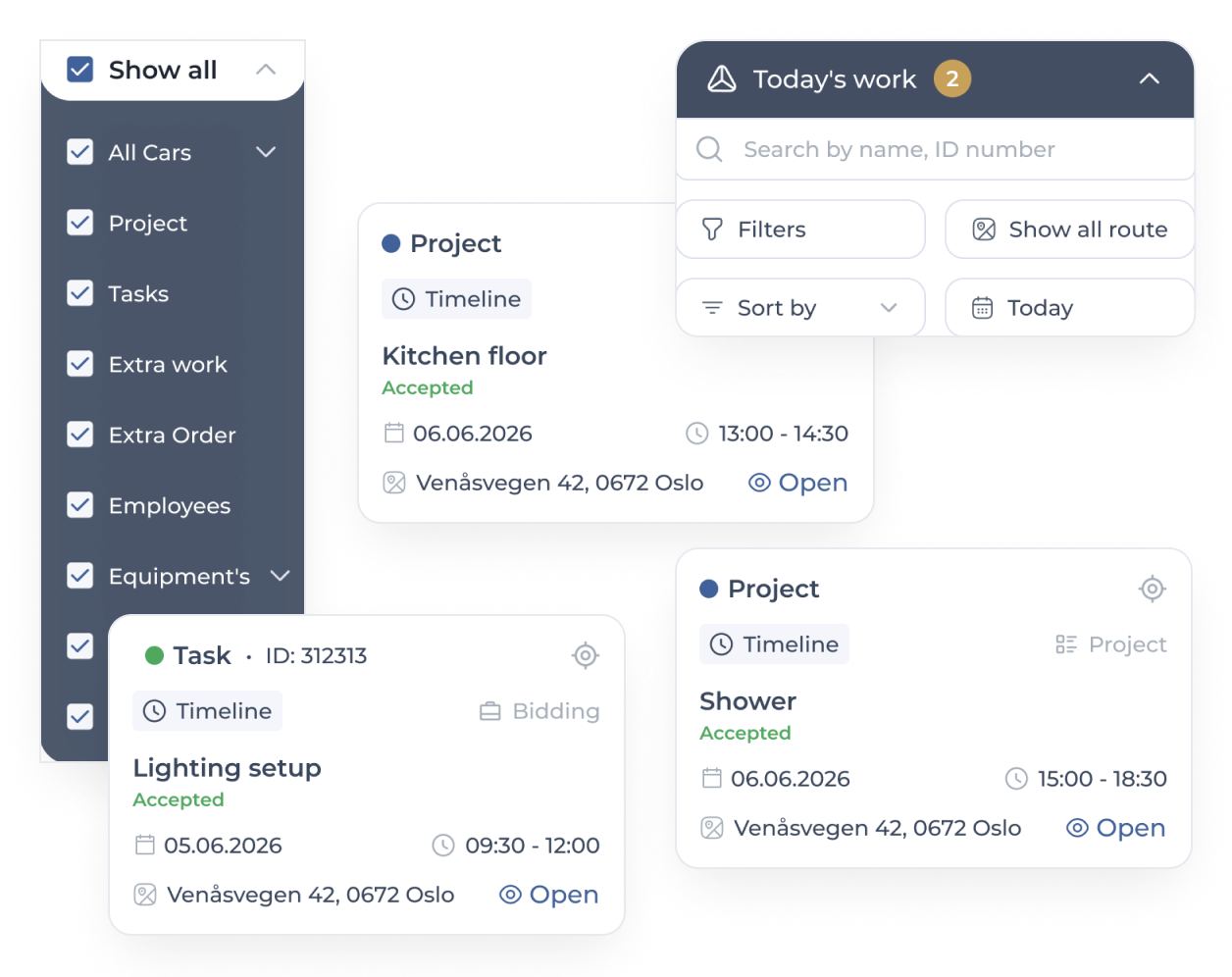
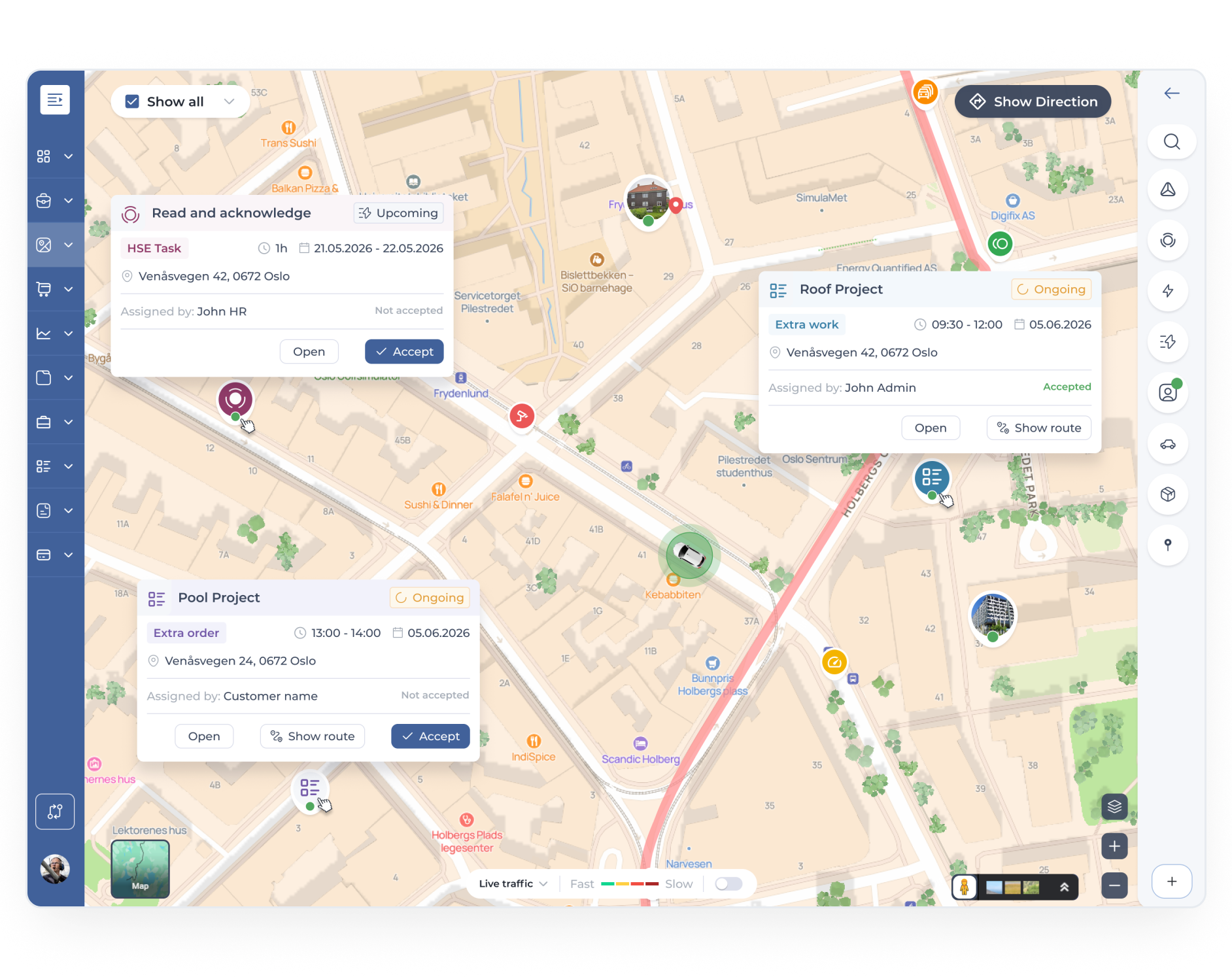
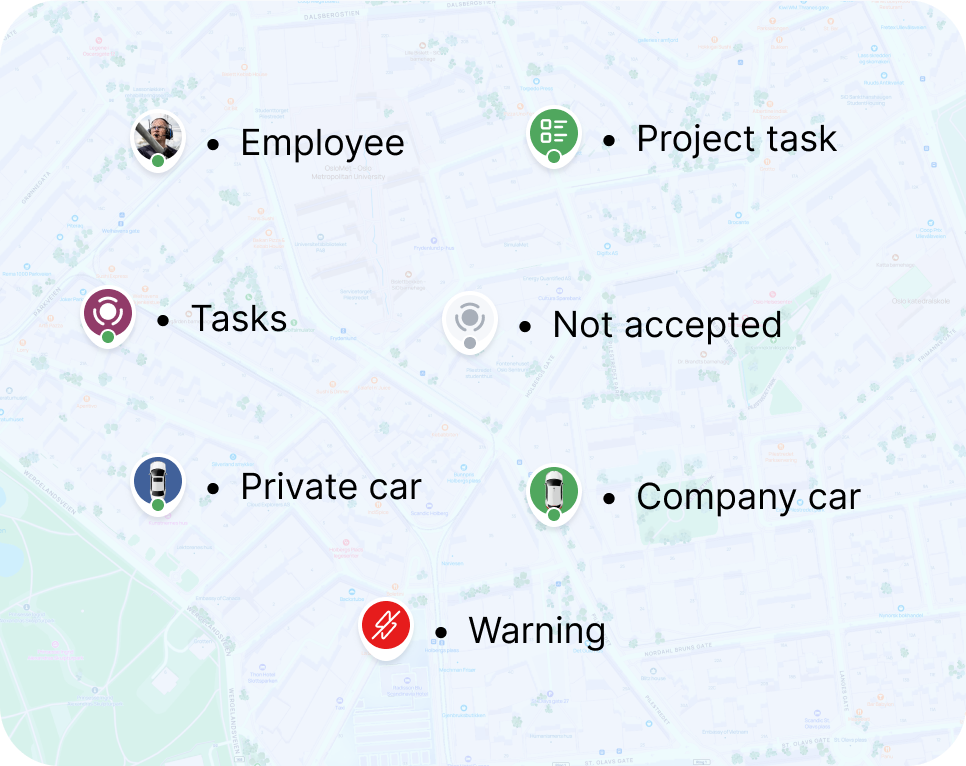
With map-based task allocation, management gains a single, unified situational overview. Active tasks, ongoing projects, available employees, and vehicles are all displayed on the same map in real time. This makes it easy to understand how locations, capacity, and workload relate to each other—without switching between systems or relying on constant phone calls.
Using filters, managers can focus on what matters at any given moment: only active tasks, a specific project, or a selected group of employees. The result is a clear operational overview that supports better decisions and reduces surprises in the field.
Automatic assignment based on "nearest + right skills"
Tasks should never be assigned randomly. The system uses both geographic proximity and registered skills to suggest the most suitable employee for each job. This reduces unnecessary driving, shortens response times, and improves the quality of work delivered.
For the business, this leads to:
- Lower fuel and time costs
- More efficient use of available resources
- Reduced stress for both employees and customers
Automation supports managerial decision-making rather than replacing it, providing a data-driven foundation for efficient dispatching.
Create urgent tasks directly from the map
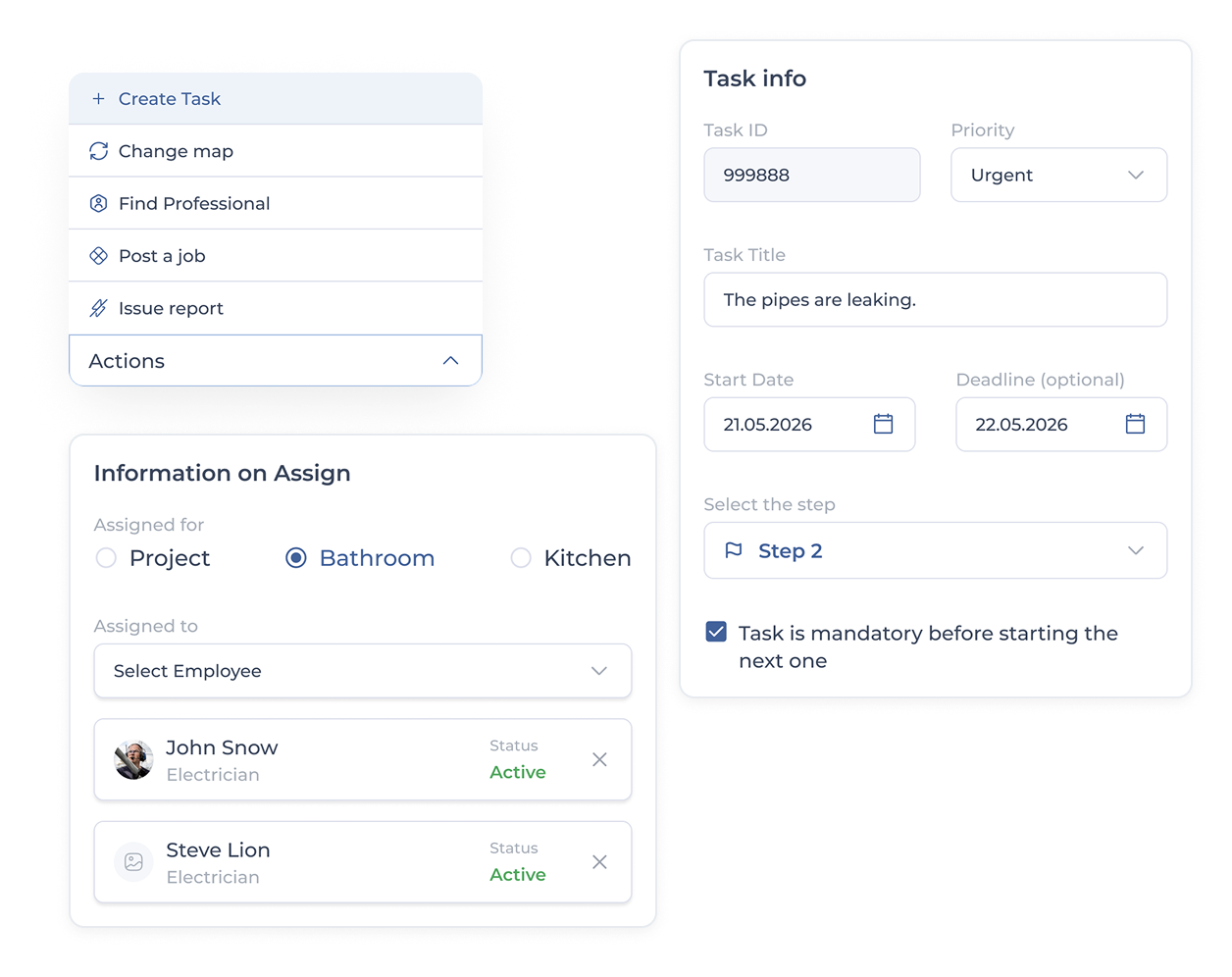
When unexpected situations arise—equipment failures, urgent customer requests, or changes within a project—time becomes critical. With map-based task allocation, urgent tasks can be created directly from the map, without navigating between modules or systems.
By clicking on the relevant location, a task is created instantly and can be assigned to the nearest available resource within seconds. This makes ad-hoc work manageable and prevents minor issues from escalating into costly delays.

From map to action – tasks connected to projects and vehicles
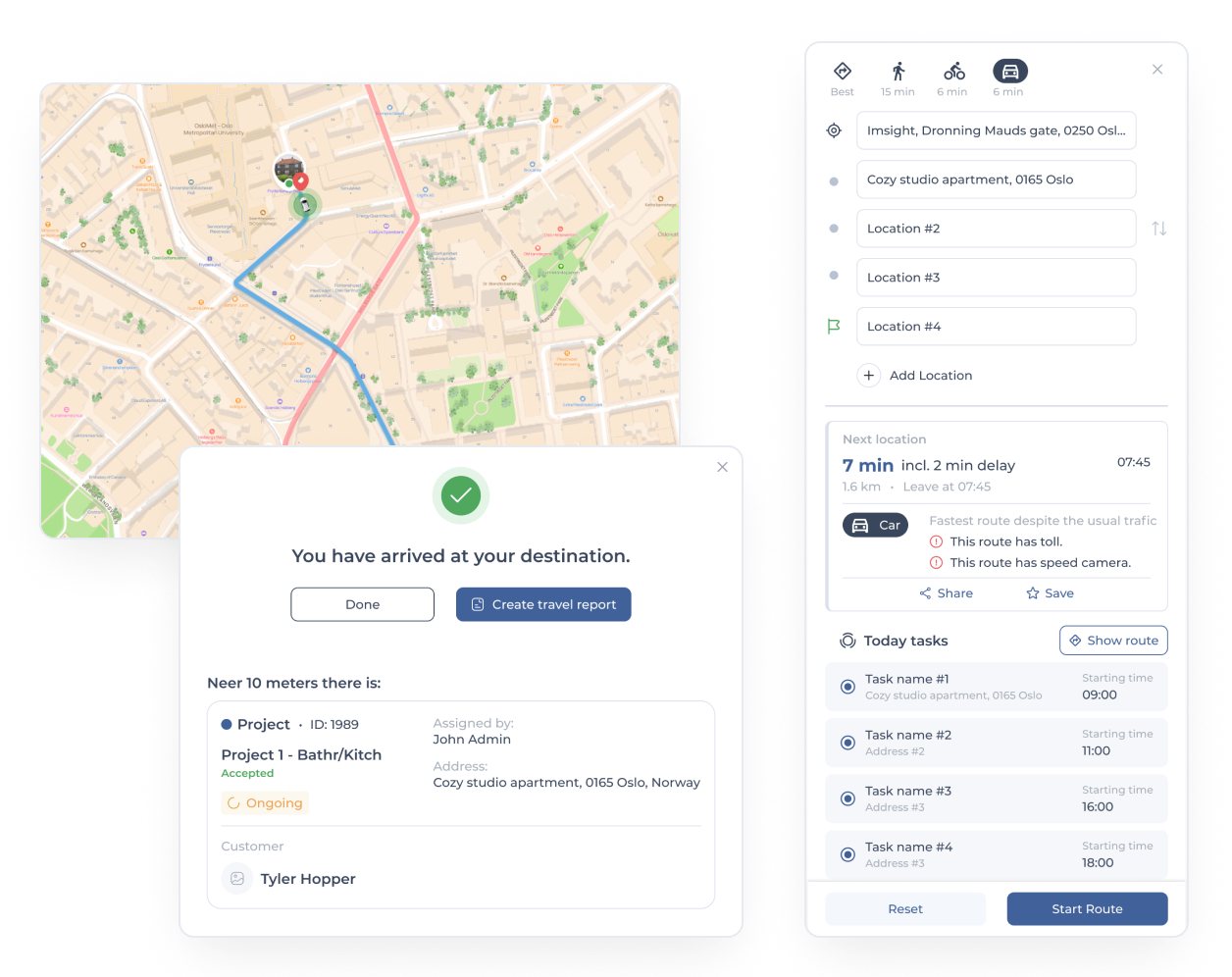
Tasks shown on the map do not exist in isolation. They are directly connected to projects, vehicles, and employees, forming a single, coherent workflow. When a task is assigned, all relevant context follows automatically: project status, assigned vehicle, history, and next steps.
This integration creates a seamless connection between Cars & Maps, project management, and sales or bidding processes. The map becomes an active control layer—not just a visual overview.
Less coordination, faster response times
Manual coordination through phone calls, messages, and spreadsheets consumes time and creates errors. Map-based task allocation significantly reduces this by bringing planning, assignment, and follow-up into one interface.
The operational impact is measurable:
- Shorter response times for service tasks
- Fewer interruptions for managers and teams
- Higher task completion capacity per day
With the same workforce, companies can handle more jobs because time is spent on execution—not coordination.
Ideal for service, construction, and field-based companies
The system is designed for industries where work happens in the field and changes are part of daily operations.
Typical use cases include:
- Cleaning and janitorial services with recurring tasks
- Construction and renovation projects with parallel activities
- Electricians, plumbers, and installers handling urgent service calls
The solution scales from daily routine tasks to complex projects involving internal teams and subcontractors—while maintaining the same level of control.
Why map-based task allocation outperforms traditional fleet systems
Traditional fleet systems such as ABAX and Autogear primarily focus on vehicles: where they have been, how far they have driven, and when they stopped. While useful for historical reporting, this provides limited operational value in real time.
Map-based task allocation in Jelpify combines:
into a single interface. The key difference lies in focus: not just GPS tracking, but full operational management of field work. This turns the solution into an operations management tool—not merely a logistics reporting system.
An operational advantage – not just a map
Map-based task allocation is a decision-making tool. It enables management to respond faster, prioritize correctly, and ensure safer working conditions for employees in the field. At the same time, customers benefit from quicker responses and more reliable service delivery.
The result is higher efficiency, improved safety, and greater customer satisfaction—driven by real-time data and structured operational control.
Frequently
Asked
Questions
Homeowners post tenders describing the work they need done, and you receive matching requests based on your trade and service area. You can review the details, submit a competitive offer, and get in touch directly with the homeowner — no cold leads, just real projects that fit what you do.
Jelpify runs on a subscription model with pricing based on your company size and the tools you need. There's no cost to browse available tenders — you only commit once you decide to submit an offer on a project.
Once a job is agreed and signed digitally, you can send invoices and track payments directly through the platform. This keeps your project economy organized in one place, without chasing paperwork or manual reconciliation.
Every professional signs in using trusted identification methods such as BankID, and is connected to an officially registered company. This keeps the platform accountable and gives homeowners confidence in who they're hiring.
Yes. Your dashboard lets you track schedules, assign subcontractors, manage documentation, and monitor several active projects at once, so nothing falls through the cracks as your workload grows.