
























AI-Driven Financial Automation
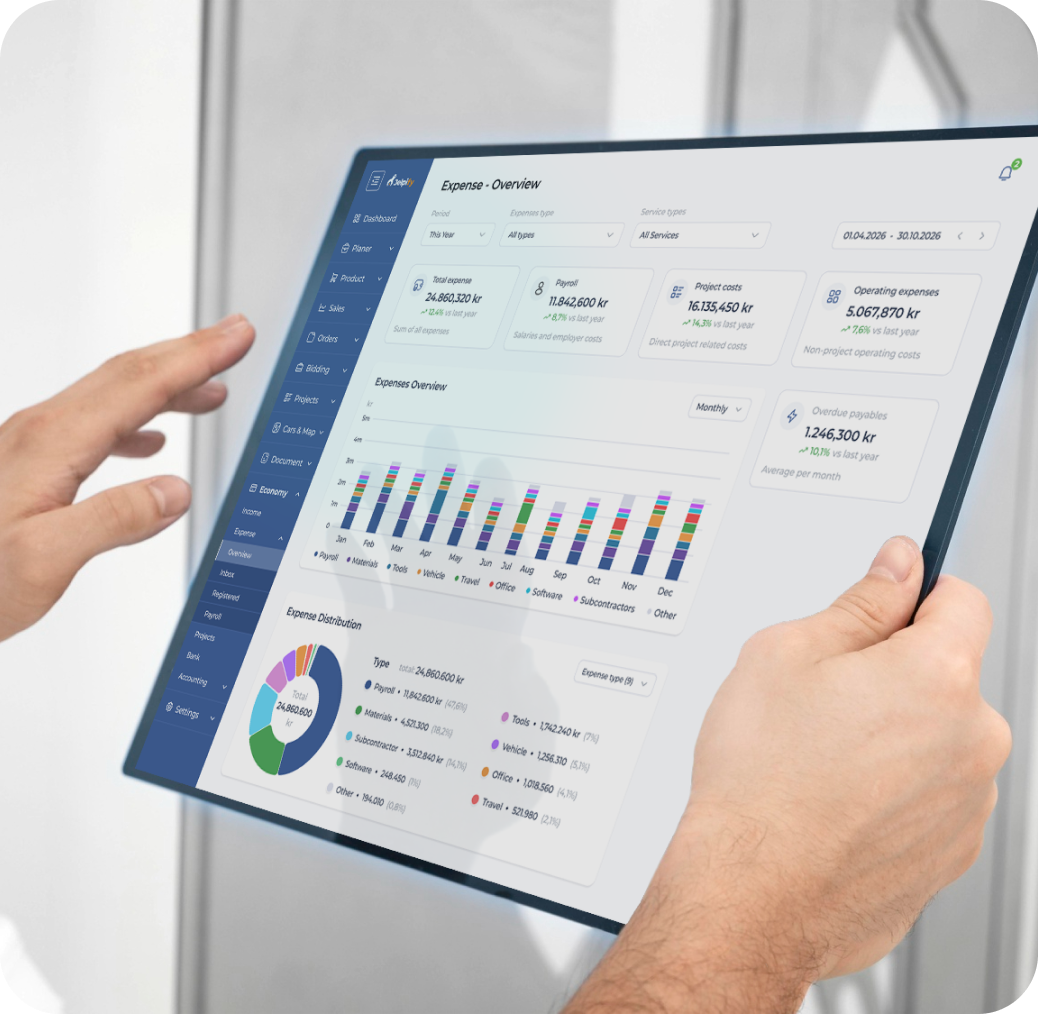
OCR and AI for Incoming Invoices
OCR combined with artificial intelligence makes it possible to automate invoice processing in a much smarter way than traditional solutions. Incoming invoices are interpreted automatically, and the system identifies key information such as amount, supplier, and payment due date. This information is linked directly to the correct project and account, helping eliminate manual steps and reduce errors. For businesses that still handle invoices manually, this represents an important improvement in both quality and speed. At the same time, a more reliable flow of financial information is ensured across the entire organization.
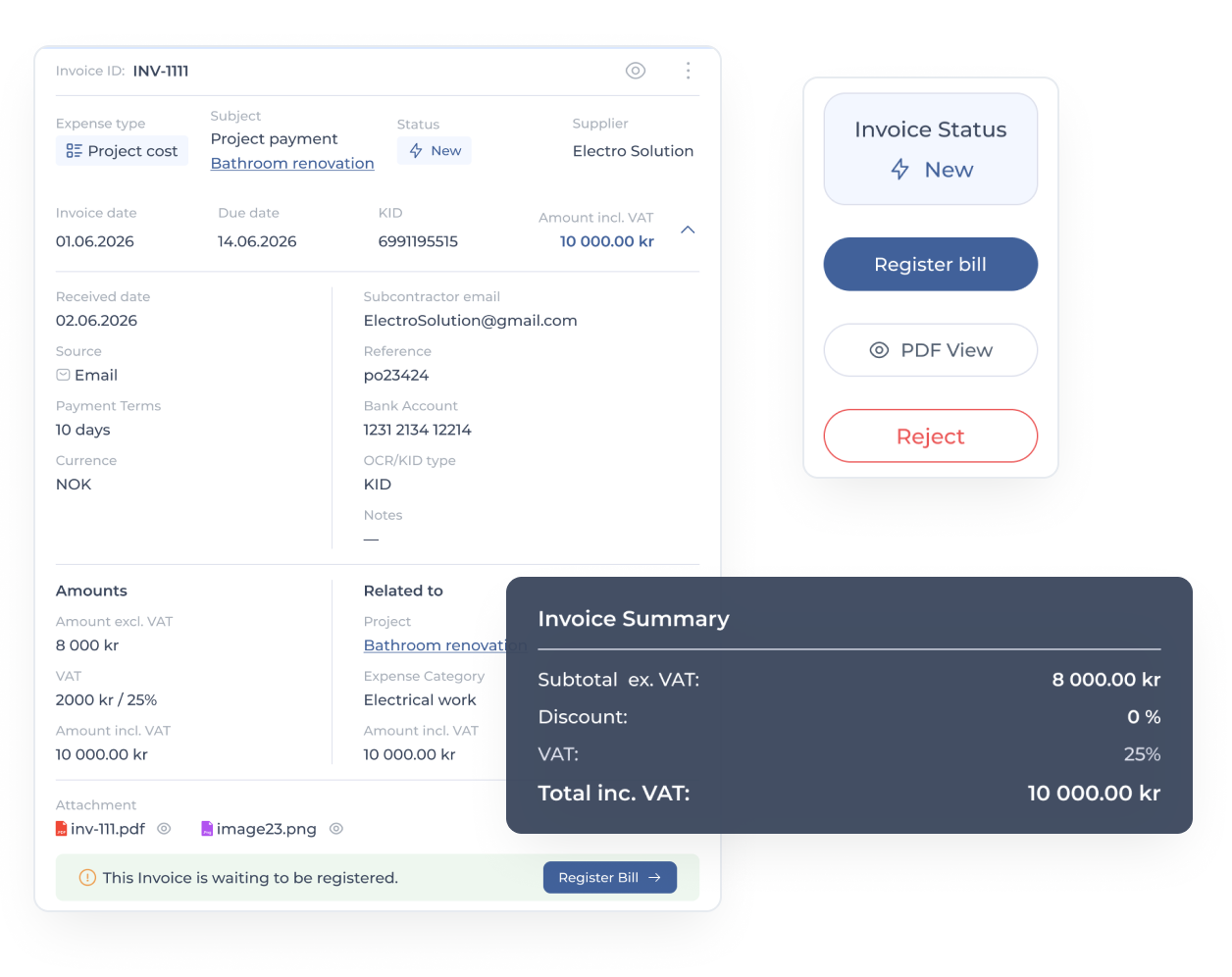
Automatic Cost Categorization
Using intelligent algorithms and machine learning, costs are automatically categorized based on context and historical patterns. The solution leverages new technologies to allocate expenses correctly across projects, cost types, and accounts. This gives management access to real-time data and more opportunities to analyze project finances without manual reconciliation. Automatic categorization makes it easier to identify deviations early and provides a stronger basis for increasing profitability.
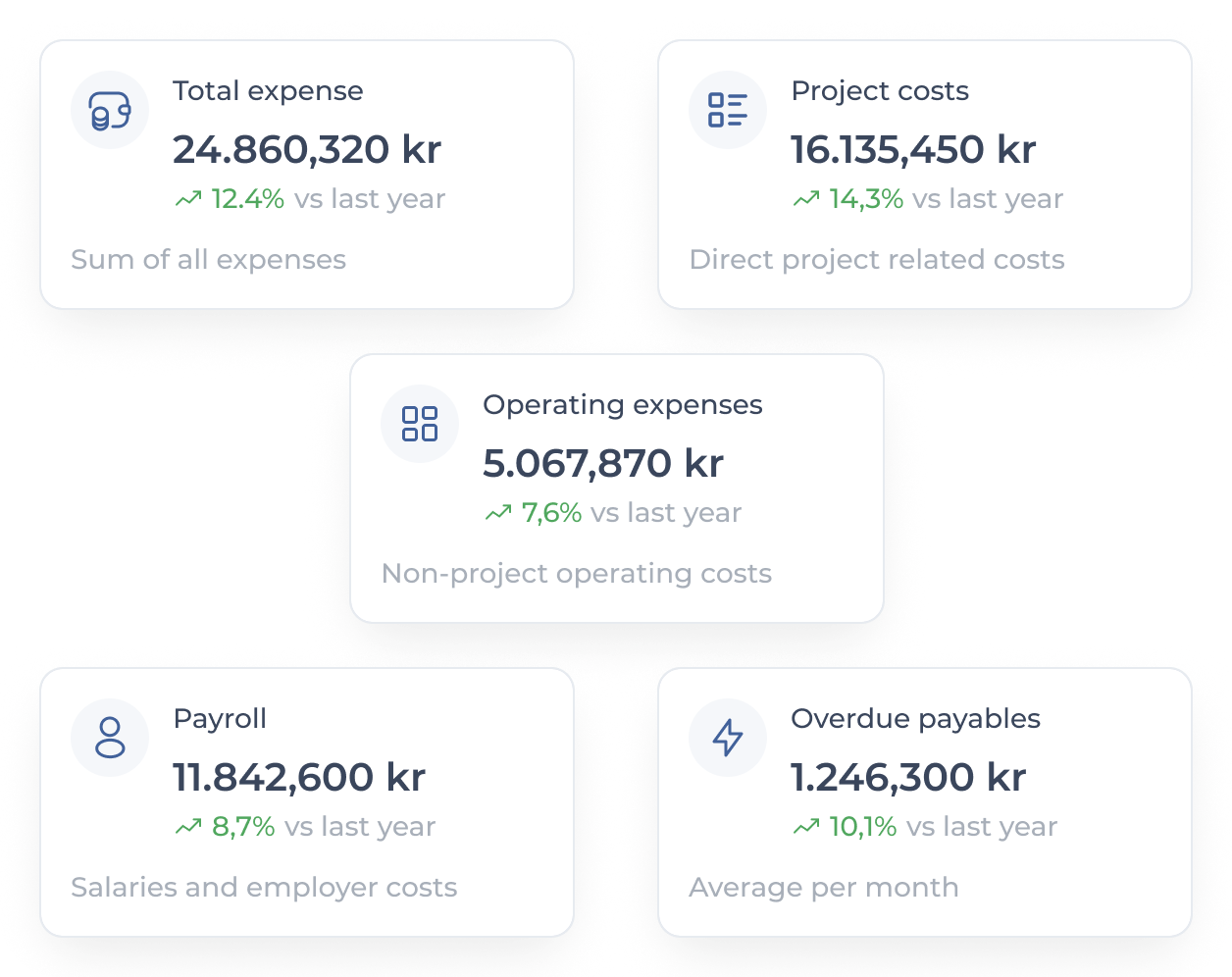
Minimizing Manual Accounting Work
When financial events are captured directly from operational processes, the need for manual bookkeeping is significantly reduced. Hours logged by employees, material usage, and project activity are automatically reflected in the accounting system. This shifts the role of accounting from historical after-the-fact reporting to a living decision-support tool. Accountants and managers gain access to complete data without spending time on manual tasks and can instead focus on analysis, control, and strategic work.
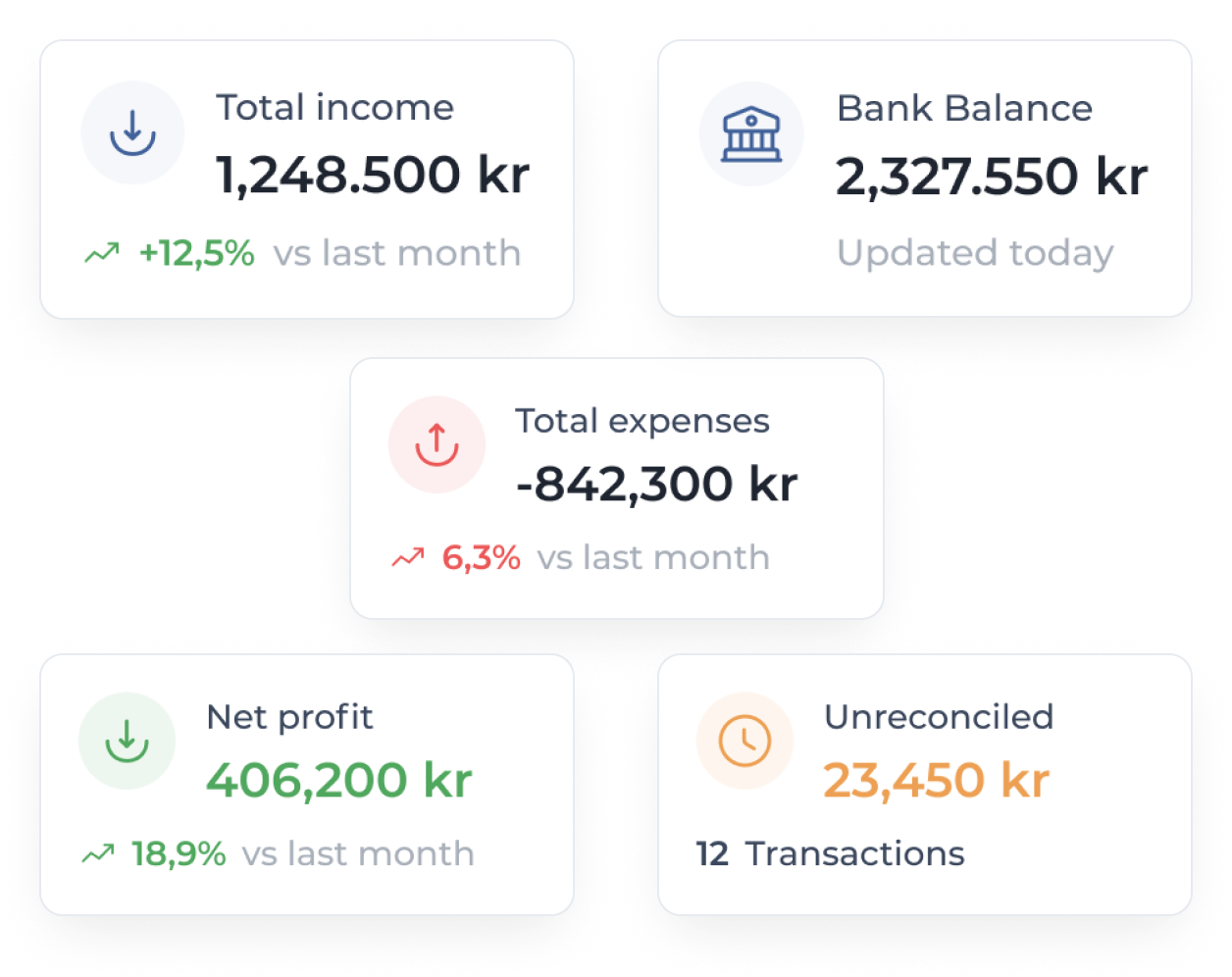
Why Choose Our Platform for Financial Automation
Many accounting systems still focus on post-registration and historical figures. Our platform is designed for businesses that need more than that — real-time insight based on actual operations.
By bringing together finance, projects, and employees in a single solution, users gain a holistic view of the business. This delivers several advantages, including better control, higher data quality, and a clearer foundation for strategic decision-making.
Key differences in practice:
What Value Does AI-Driven Financial Automation Deliver?
AI-driven financial automation provides tangible business benefits. By continuously analyzing data, the system can generate forecasts and deliver early warnings about potential challenges.
Typical costs handled automatically include:
- Improve cost control
- Respond faster to deviations
- Make decisions based on up-to-date information
Automated processes give businesses better conditions to manage complexity while creating room for growth and innovation.
How to Get Started with Financial Automation
Onboarding is designed for businesses that want to get started quickly without disrupting existing workflows. The platform is implemented step by step, with a focus on delivering immediate value.
Onboarding includes:
Setup of projects, roles, and access
Integration of existing systems where needed
Guidance so each user quickly understands their role
The solution is flexible and supports both current needs and future opportunities. For businesses that want to automate their finances in a secure and scalable way, this is an important step forward.