
























Coordinating Subcontractors in One Unified System

Challenges of Subcontractor Management in Traditional Projects
In many projects, multiple parties must work together efficiently to deliver the right quality to the customer. However, coordination often works poorly when fragmented tools and manual routines are used. Information is spread across emails, phone calls, spreadsheets, and disconnected systems, making it difficult to take responsibility for the entire process.
The lack of a single source of truth creates challenges such as:
- Unclear responsibility between internal employees and external partners
- Limited visibility into progress and actual work delivered
- Slow handling of changes and unforeseen needs
- Increased risk of errors, poor quality, and additional costs
When follow-up is not properly documented and work cannot be tracked in real time, meeting both customer requirements and internal expectations becomes difficult.
How Jelpify Brings Subcontractors and Internal Teams Together
Jelpify acts as a shared operational system where employees, subcontractors, projects, and tasks are brought together into one structure. Instead of working across multiple disconnected solutions, companies get a complete platform that covers the entire workflow—from planning to follow-up.
The system makes it easier to:
- Coordinate internal and external resources
- Ensure all parties follow the same routines
- Handle changes quickly and in a structured way
- Document work and responsibility throughout the process
This gives management and project leaders better operational support, while collaboration with partner companies becomes more efficient and transparent.
Connect Subcontractors Directly to Projects
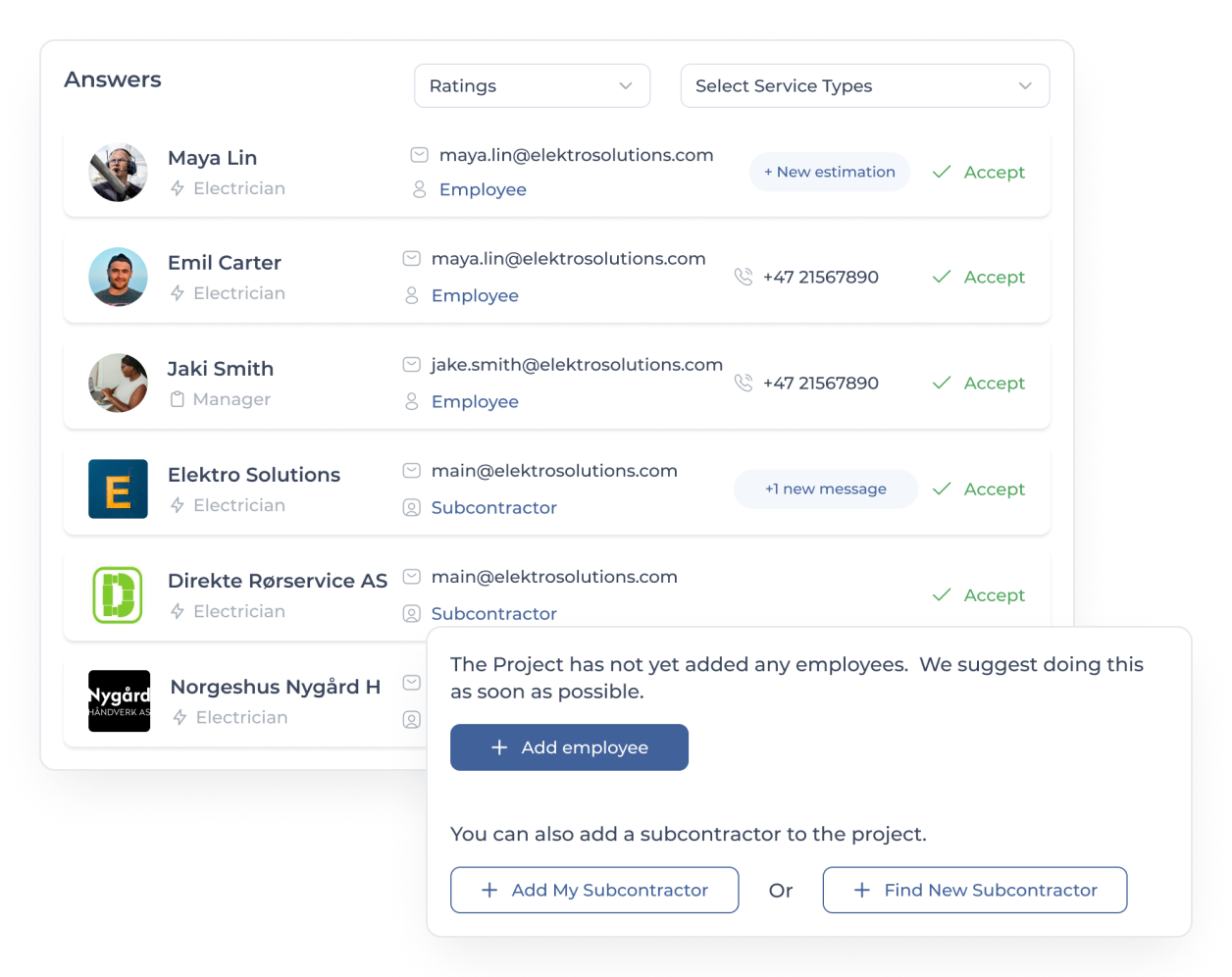
With Jelpify, subcontractors can be invited directly into projects, becoming a natural part of the workflow. They gain clear visibility into which tasks they are responsible for, which requirements apply, and how their work should be documented.
For project managers, this means full transparency into who is doing what, when, and where. All communication, follow-up, and documentation take place in the same system, reducing the need for manual coordination and improving control over quality and deliveries.

Distribute Tasks Between Internal and External Resources
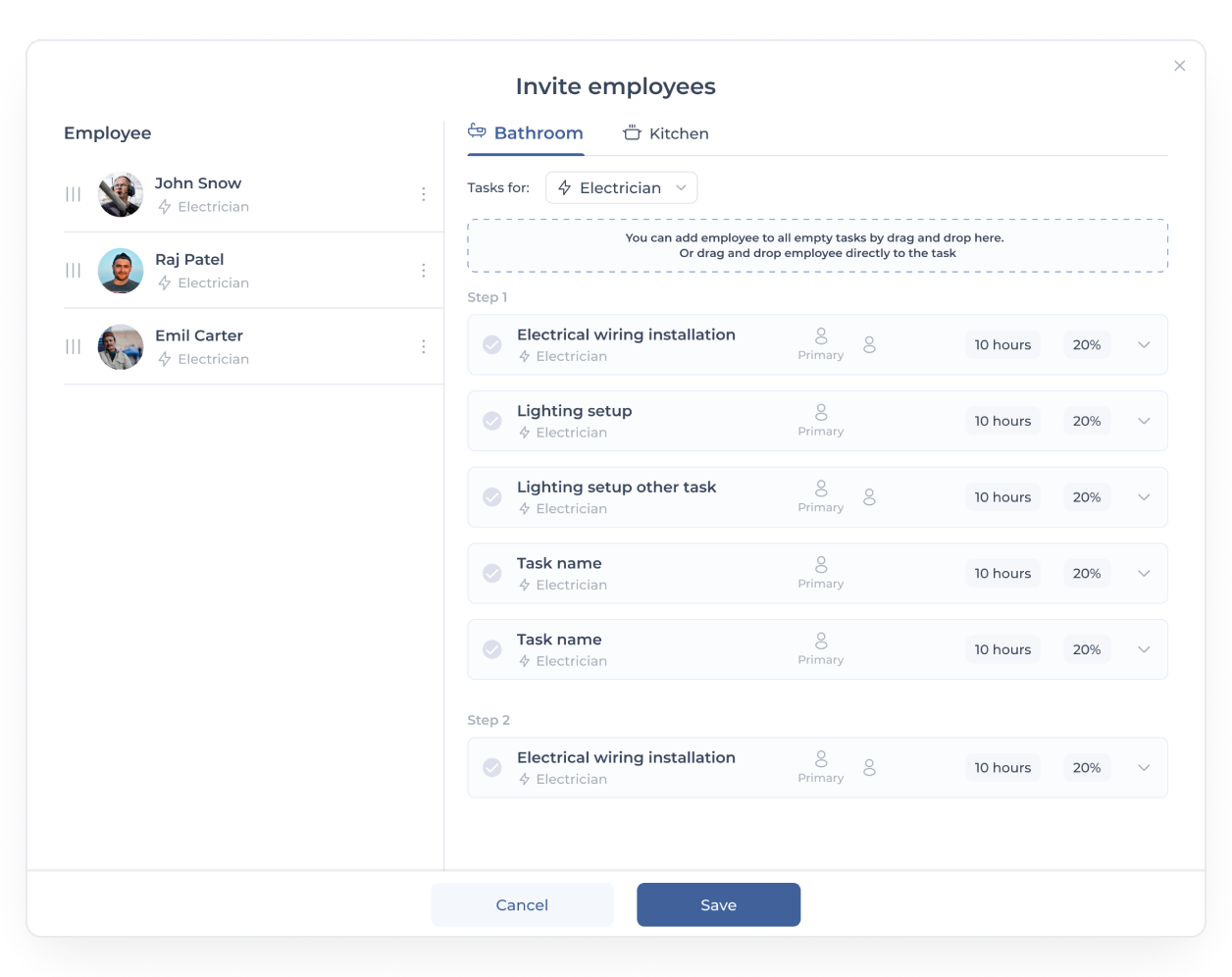
Effective resource management requires flexibility. Jelpify makes it easy to distribute tasks between internal employees and external subcontractors based on competence, availability, and project needs.
In cases of illness, urgent work, or other unforeseen situations, tasks can be quickly reassigned without disrupting the entire process. This operational flexibility reduces the risk of delays and enables controlled handling of changes, even in larger and more complex projects.
Real-Time Overview of Status and Progress
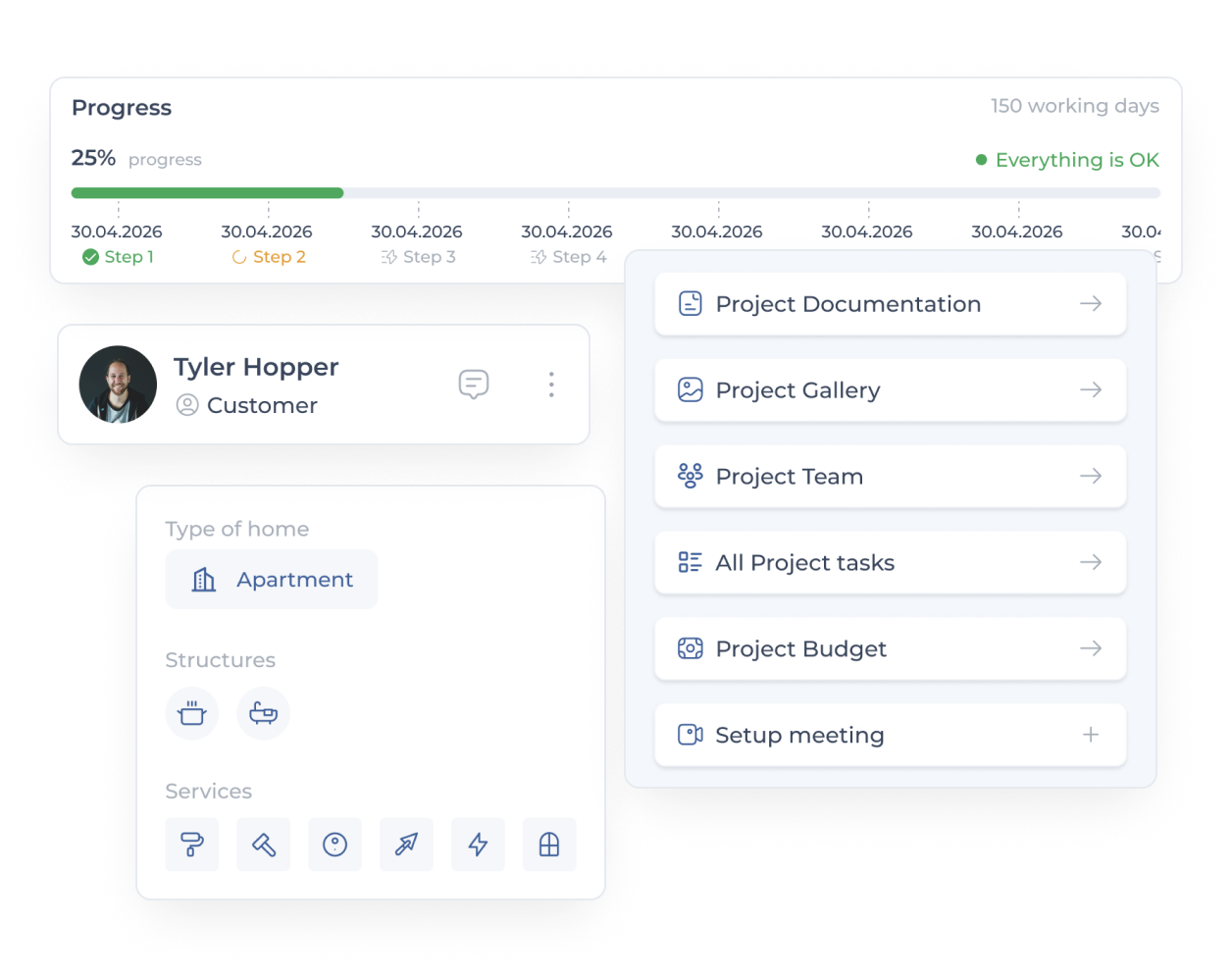
Instead of relying on manual status updates or frequent phone calls, Jelpify provides real-time visibility into progress. Managers can see at any time which tasks are in progress, completed, or delayed.
This results in:
- Better decision-making
- Faster follow-up when deviations occur
- Less need for additional meetings and reporting
All activity is continuously documented, making it easier to track work and ensure that deliveries meet the expected quality.
Coordination via Maps and Location
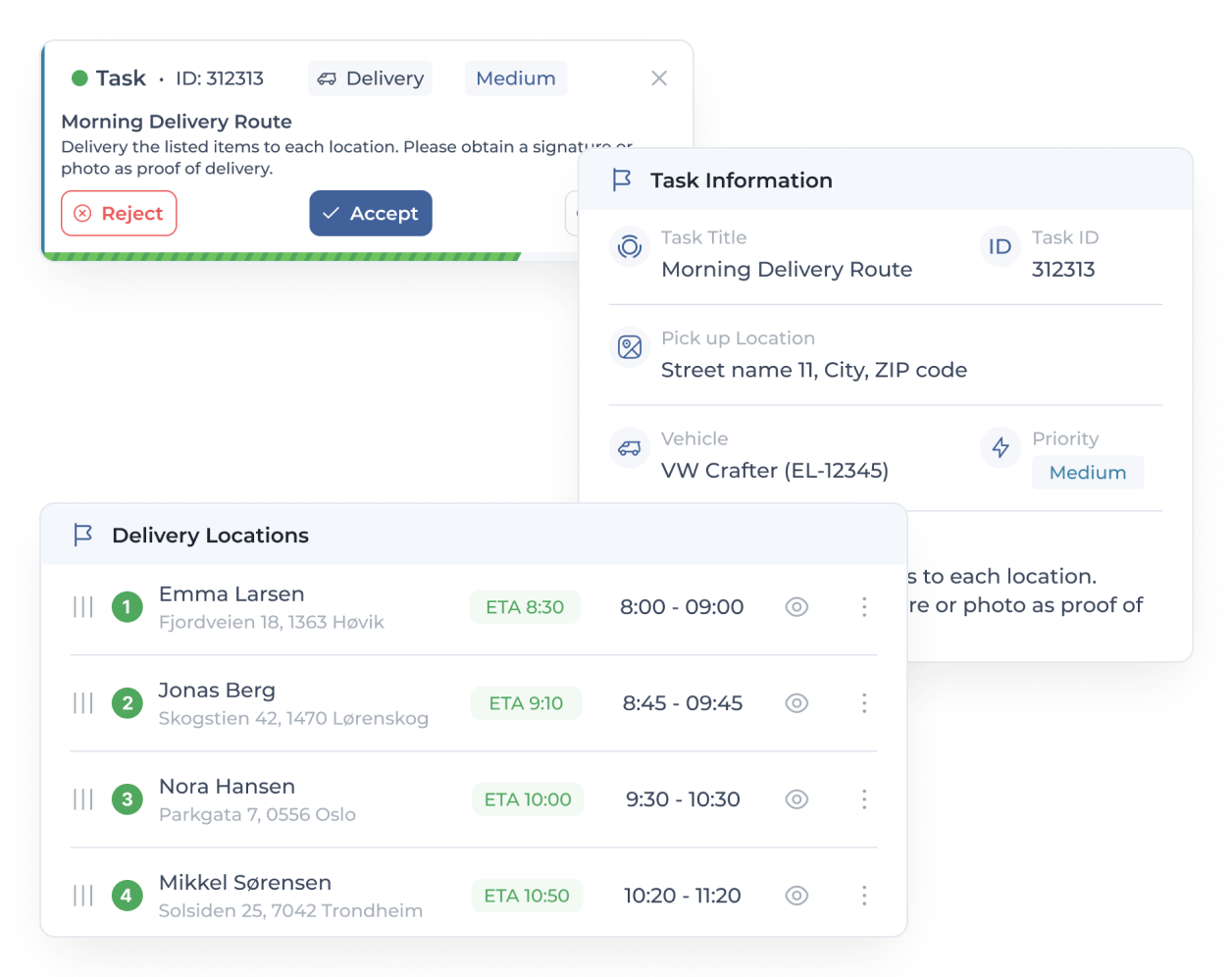
Through integration with Cars & Maps, Jelpify also enables location-based coordination of mobile teams and subcontractors. Tasks can be linked directly to projects and addresses, ensuring that the right resources are sent to the right place at the right time.
This functionality is especially valuable for service and construction projects, where efficient use of time and travel reduces both costs and strain on employees. Location-based coordination contributes to a more precise and structured workday.
Why Subcontractor Coordination Is Critical for Profitability
Effective coordination is not just about structure and order—it directly impacts profitability. When tasks are managed efficiently and responsibilities are clearly defined, the risk of errors, rework, and delays is significantly reduced.
Better coordination leads to:
- Faster project execution
- Fewer deviations and claims
- Higher delivery quality
- Increased customer trust
Over time, this results in lower costs, more predictable operations, and a stronger competitive position.
Jelpify vs. Fragmented Solutions
Many companies still rely on separate tools for task management, GPS tracking, documentation, and communication. This creates gaps in information flow and increases the need for manual follow-up.
| Fragmented Solutions | Jelpify |
|---|---|
| Multiple disconnected systems | One unified system |
| Manual follow-up | Automated real-time overview |
| High risk of errors | Better control and documentation |
| Extra time and costs | More efficient use of resources |
Who Is Subcontractor Coordination For?
This functionality is particularly suitable for companies that:
- Take responsibility for the entire customer delivery
- Work with multiple subcontractors simultaneously
- Operate in projects with high requirements for quality and documentation
This includes main contractors, construction and renovation companies, and service providers that want better control over work and collaboration.
Ready for Full Control?
A solution designed to work in real operational environments—supporting both small and larger organizations with a simple yet powerful way to coordinate subcontractors and internal resources.
If you want better visibility, reduced risk, and a more structured workflow, Jelpify is the right choice. Request a demo and see how the system can be tailored to your needs.
Frequently
Asked
Questions
Homeowners post tenders describing the work they need done, and you receive matching requests based on your trade and service area. You can review the details, submit a competitive offer, and get in touch directly with the homeowner — no cold leads, just real projects that fit what you do.
Jelpify runs on a subscription model with pricing based on your company size and the tools you need. There's no cost to browse available tenders — you only commit once you decide to submit an offer on a project.
Once a job is agreed and signed digitally, you can send invoices and track payments directly through the platform. This keeps your project economy organized in one place, without chasing paperwork or manual reconciliation.
Every professional signs in using trusted identification methods such as BankID, and is connected to an officially registered company. This keeps the platform accountable and gives homeowners confidence in who they're hiring.
Yes. Your dashboard lets you track schedules, assign subcontractors, manage documentation, and monitor several active projects at once, so nothing falls through the cracks as your workload grows.